October 16–18, 2026 | The 23rd International Symposium on Financial Systems Engineering and Risk Management (FSERM) was held in Chengdu. He Zhengyou, Member of the Standing Committee of the Party Committee and Vice President of Southwest Jiaotong University (SWJTU), delivered opening remarks. Peng Bin, Deputy Secretary of the Party Leadership Group of the Sichuan Federation of Social Science Associations, and Zhang Wei, Director of the SESC Financial Systems Engineering Technical Committee, also spoke at the ceremony. Yang Xiaoguang, President of the Systems Engineering Society of China (SESC), addressed the conference via video. More than 540 experts, scholars, industry representatives, and students attended the event. They came from over 110 universities, research institutes, and industry organizations in China and abroad. Under the theme “Finance + AI: High-Quality Financial Development and Systemic Security,” participants discussed collaborative innovation across government, industry, academia, research, and application. Jiang Jia, Secretary of the CPC Committee of the School of Economics and Management (SEM) at SWJTU, presided over the opening ceremony.
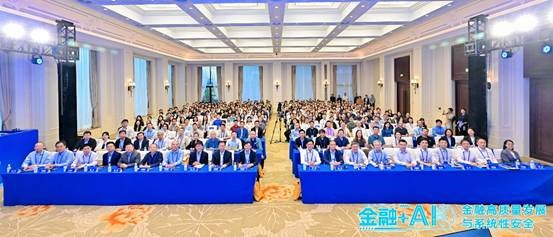
Opening ceremony of the 23rd FSERM
He Zhengyou noted that artificial intelligence, as a strategic technology driving a new round of technological revolution and industrial transformation, is reshaping the development paradigm of the financial industry. He expressed hope that the conference would serve as a bridge to deepen academic exchange and collaboration among peers in China and abroad, establish a regular seminar series to support the cultivation of new quality productive forces, and contribute to building a leading country in education, science and technology, talent, and finance.
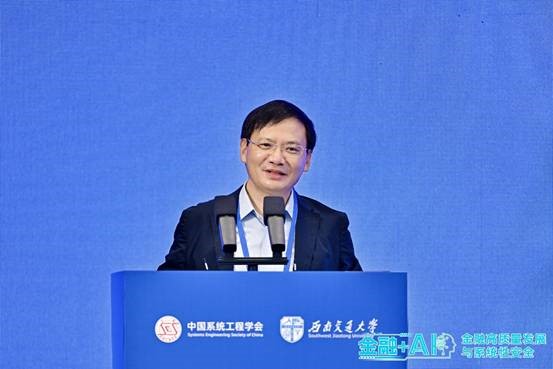
He Zhengyou, Vice President of SWJTU, delivers remarks
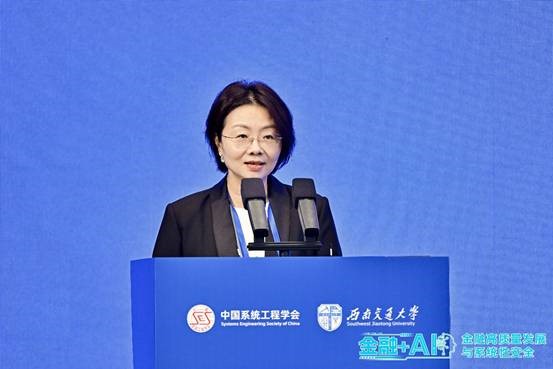
Jiang Jia, Secretary of the CPC SEM Committee, presides over the opening ceremony
Peng Bin remarked that the Fourth Plenary Session of the 20th Central Committee of the Communist Party of China clearly defined the strategic position of artificial intelligence, and the financial sector is an important application scenario for AI, with strong demand for theoretical and practical research. The theme of this year’s conference is closely follows the pulse of the times and aligns with major national strategies. Sichuan is accelerating its development into a financial center in western China, providing rich practical scenarios and broad application prospects for research in this field.
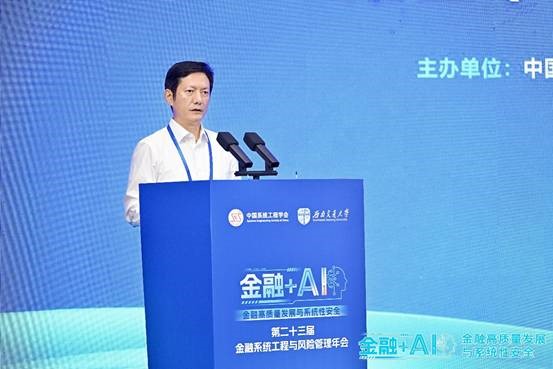
Peng Bin, Deputy Secretary of the Party Leadership Group of the Sichuan Federation of Social Science Associations, speaks
Yang Xiaoguang stated that the conference theme is grounded in national strategy and directly addresses real-world issues, with both theoretical significance and practical relevance. Artificial intelligence does not eliminate risks but changes their form, channels of transmission, and speed of diffusion. He expressed hope that participating scholars would base their work on China’s financial realities, develop new theories and paradigms, and promote deep integration of theory, technology, and application.
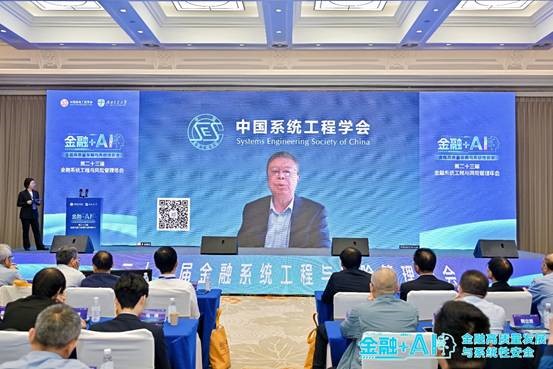
Yang Xiaoguang, President of SESC, delivers remarks
Zhang Wei noted that financial engineering focuses on financial product design, while financial systems engineering examines the financial system as a whole. He proposed that academic research and talent cultivation should clarify the functions and interconnections of internal elements of the financial system to ensure its stable and efficient operation, and encouraged participating scholars to engage in full exchange and clash of ideas to push the disciplinary frontier toward new breakthroughs.
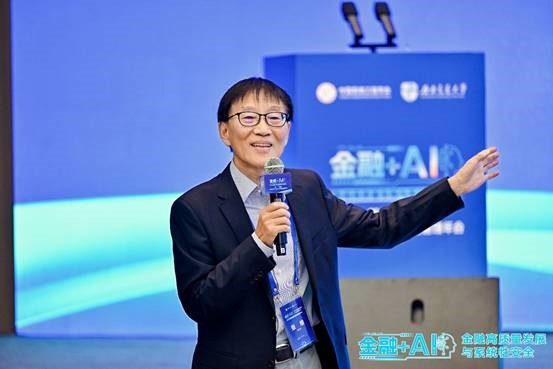
Zhang Wei, Director of the Financial Systems Engineering Committee of SESC, speaks
The conference featured four keynote reports. Professor Wu Chongfeng of Shanghai Jiao Tong University, Professor Liu Xiaoxing of Southeast University, Professor Cao Jie of The Hong Kong Polytechnic University, and Professor Yang Zihui of Shanghai University of Finance and Economics shared cutting-edge research on topics including the mechanism underlying futures and options anomalies, quantum observation of systemic financial risk, visual peer effects in stock markets, and supply chain credit risk spillovers under climate risk. Professors Zhang Wei, Huang Dengshi, Chen Rongda, and Zhang Yuejun chaired the sessions.
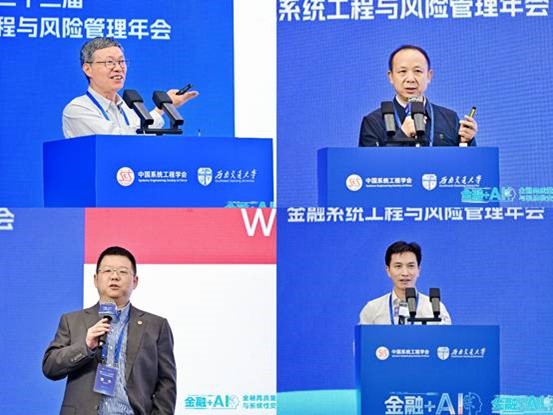
Keynote speakers share their research findings
During the invited sessions, 15 renowned scholars in China and abroad, including Professor Kong Dongmin of Huazhong University of Science and Technology and Professor Wei Yu of Yunnan University of Finance and Economics, shared the latest research progress on financial risk, AI finance, green finance, and other topics. In addition, the conference held multiple parallel sub-forums covering more than 40 frontier topics, including systemic risk measurement, AI and investor behavior, derivatives markets, energy transition and carbon finance, and biodiversity and institutional investment, fostering a vibrant atmosphere of discussion and thorough exchange of ideas.
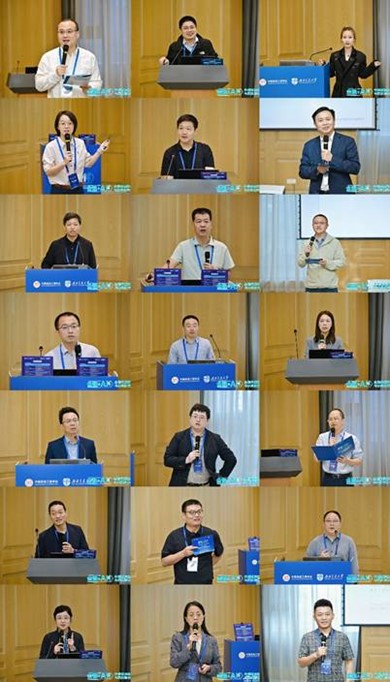
Keynote speakers and moderators at the reporting session
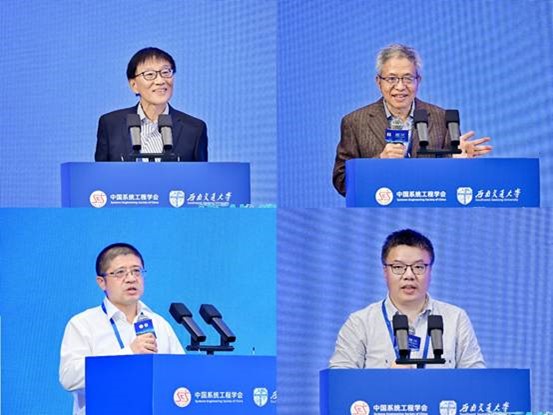
The closing ceremony was moderated by Professor Feng Xu of Tianjin University. He spoke highly of the organization and academic value of the conference and expressed hope for continued deepening of cross-university and cross-institutional academic cooperation to jointly promote innovative development of the financial systems engineering discipline. Ma Feng, Vice Dean of SEM at SWJTU, delivered closing remarks on behalf of the co-organizers, stating that this academic event was an important practice for SEM in expanding external academic exchange and advancing in-depth development of its disciplines. The closing ceremony recognized the authors of six high-quality papers and young scholars’ high-quality papers.
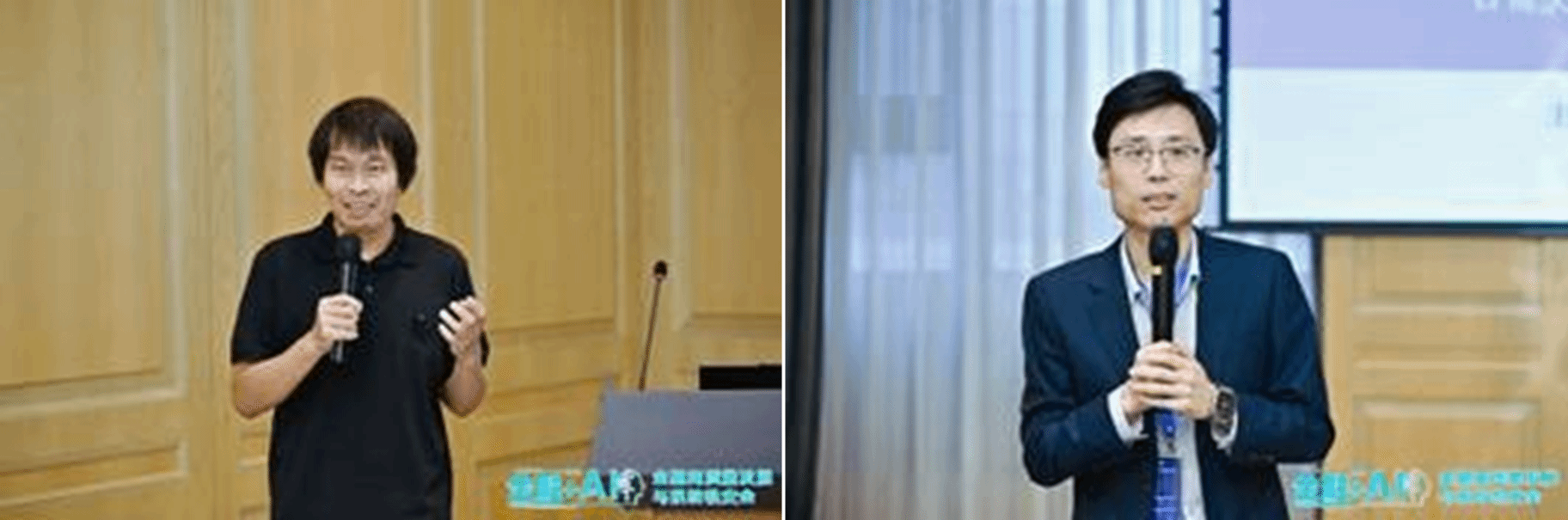
Scholars deliver remarks at the closing ceremony
The conference built a high-level academic dialogue platform in the field of financial systems engineering and risk management in China. Closely centering on the theme “Finance + AI: High-Quality Financial Development and Systemic Security,” the conference held in-depth discussions on key propositions such as AI-empowered financial innovation and prevention and resolution of systemic financial risks, providing theoretical references for assessing systemic changes in the financial industry in the AI era, contributing intellectual support for building a leading financial country, facilitating the translation of frontier financial theories and technologies into practice, and offering academic wisdom for cultivating new quality productive forces and serving high-quality economic development.